top of page

Country Case Studies

<p class="font_8">We achieved two key digital health milestones since 2024:</p>
<p class="font_8"><br></p>
<h5 class="font_5"><strong>CDR was successfully deployed.</strong></h5>
<p class="font_8">With Jembi's support, the Addis Ababa City Administration Health Bureau (AACAHB) implemented a CDR for HIV programmeprogram data, connecting more than 65 health facilities and managing over 201,298 patient records. Data aggregation time fell from weeks to days, with 99.9% data accuracy, enabling more responsive decision-making.</p>
<p class="font_8"><br></p>
<h5 class="font_5"><strong>Foundations for National Health Data Integration</strong></h5>
<p class="font_8">Beyond Addis Ababa, the project established the technical foundation architecture for Ethiopia's planned National Data Repository and Health Data Warehouse. Early work on an MPI has begun (as in the Kenyan example), addressing the need for unified patient identification across the health system.</p>
<p class="font_8"><br></p>
<h5 class="font_5"><strong>Building local capacity</strong></h5>
<p class="font_8">The project focused on knowledge transfer through hands-on training for AACAHB and ICAP teams, comprehensive documentation handover, and a structured transition of day-to-day operations to ICAP, supporting long-term sustainability.</p>
<p class="font_8"><br></p>
<h5 class="font_5"><strong>Technical innovation</strong></h5>
<p class="font_8">The CDR uses open-source technologies with established health data standards:</p>
<ul class="font_8">
  <li><p class="font_8">An OpenHIE-compliant architecture utilises OpenHIM to facilitate secure data exchange.</p></li>
  <li><p class="font_8">The FHIR standard ensures future interoperability and longitudinal patient records.</p></li>
  <li><p class="font_8">PowerBI dashboards provide clear insights for decision-makers.</p></li>
</ul>
<p class="font_8"><br></p>
<h5 class="font_5"><strong>Why this work matters</strong></h5>
<ul class="font_8">
  <li><p class="font_8">For patients: Integrated records support safer, more reliable care</p></li>
  <li><p class="font_8">For health officers: Automated data aggregation reduces admin burden</p></li>
  <li><p class="font_8">For programme managers: Timely data enables better decision-making</p></li>
  <li><p class="font_8">For funders: Shared infrastructure creates lasting value and improves reporting</p></li>
</ul>
<p class="font_8"><br></p>
<p class="font_8">The Ethiopia CDR project shows how joint digital health initiatives can lead to real, lasting improvements in health system performance. The project has brought about both the technical systems and the skills needed on the ground for Ethiopia's digital health future.</p>
<p class="font_8"><br></p>

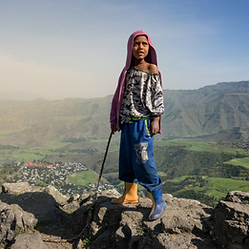
Ethiopia

Our Central Data Repository (CDR) connects more than 65 facilities, manages 53K HIV patient records, and reduces data aggregation from weeks to days with 99.9% data accuracy.

<h5 class="font_5"><strong>National Electronic Health Record (NEHR) platform</strong></h5>
<p class="font_8">Sri Lanka's healthcare system had fragmented patient data across four major electronic medical record systems, affecting approximately 50 million patient encounters annually. This fragmentation affected continuity of care, particularly for patients moving between facilities.</p>
<p class="font_8"><br></p>
<p class="font_8"><strong>Working with the Ministry of Health, we implemented an FHIR-compliant NEHR platform quickly:</strong></p>
<ul class="font_8">
  <li><p class="font_8">Implemented the International Patient Summary standard in nine weeks</p></li>
  <li><p class="font_8">Integrated four major clinical systems with the Health Information Exchange</p></li>
  <li><p class="font_8">Enabled data exchange across 17 use case topics during a national connectathon</p></li>
  <li><p class="font_8">Developed an FHIR Implementation Guide and Terminology Service</p></li>
</ul>
<p class="font_8"><br></p>
<p class="font_8">National healthcare systems can share the International Patient Summary (IPS), a standardised set of essential health information about a patient, during emergencies or unplanned care. Doctors can use it to quickly access critical patient information such as allergies, medications and medical problems.</p>
<p class="font_8"><br></p>
<h5 class="font_5"><strong>Why this work matters</strong></h5>
<ul class="font_8">
  <li><p class="font_8"><strong>For patients:</strong> Comprehensive medical histories are instantly available regardless of which facility they visit.</p></li>
  <li><p class="font_8"><strong>For healthcare providers:</strong> Better data accuracy supports improved clinical decision-making.</p></li>
  <li><p class="font_8"><strong>For health facilities:</strong> Streamlined workflows reduce administrative burdens.</p></li>
  <li><p class="font_8"><strong>For the health system:</strong> Integration of over 50 million annual patient encounters creates powerful opportunities for health planning.</p></li>
</ul>
<p class="font_8"><br></p>
<h5 class="font_5"><em>“We owe a debt of gratitude to the Jembi team, whose dedicated support and expertise played a pivotal role in setting up the essential infrastructure and assisting the Ministry of Health team in the development of FHIR Implementation Guides.”</em></h5>
<p class="font_8" style="text-align: right"><strong>– Dr Chaminda Weerabaddana, Health Informatician at the Ministry of Health, Sri Lanka</strong></p>
<p class="font_8" style="text-align: right"><br></p>
<p class="font_8"><br></p>
<p class="font_8">Our work in Sri Lanka shows that nationwide health data integration is achievable even in resource-constrained settings. This success creates opportunities to share knowledge throughout Asia and beyond, helping other countries improve their health data systems</p>
<p class="font_8"><br></p>

Sri Lanka

Our FHIR-compliant EHR system links four major medical record systems, connecting over 50 million patient visits annually.

<h5 class="font_5">Technical innovation</h5>
<p class="font_8">OpenHIM routes, orchestrates and standardises data exchanges across Indonesia's fragmented health landscape, which was previously scattered among more than 400 health systems, 50 hospital systems and 70 primary healthcare systems. It helps ensure compliance with FHIR standards for nationwide data exchange.</p>
<p class="font_8"><br></p>
<h5 class="font_5">Enhanced healthcare integration</h5>
<p class="font_8">The implementation received strong government support. Our participation at the 2024 AeHIN Conference in Jakarta strengthened relationships within Southeast Asia's digital health community.</p>
<p class="font_8"><br></p>
<h5 class="font_5">Why this work matters</h5>
<ul class="font_8">
  <li><p class="font_8"><strong>For patients</strong>: This work supports improved quality of care, with key data exchange use cases such as TB surveillance, outpatient care, antenatal care and lab results.</p></li>
  <li><p class="font_8"><strong>For public health officials</strong>: Builds a foundation for healthcare innovation across thousands of islands.</p></li>
  <li><p class="font_8"><strong>For healthcare systems</strong>: Processes 6,696 requests per minute across the national healthcare network.</p></li>
  <li><p class="font_8"><strong>For infrastructure staff</strong>: Handles 93 requests per second with 888 ms median response time.</p></li>
  <li><p class="font_8"><strong>For developers</strong>: Eliminates redundant FHIR compliance work</p></li>
</ul>
<p class="font_8"><br></p>
<p class="font_8">Indonesia shows how digital health infrastructure can unite dispersed healthcare systems. By addressing interoperability challenges at scale, the country is improving healthcare delivery for its 270 million citizens.</p>

Indonesia

In Indonesia, Open Health Information Mediator (OpenHIM) connects previously separate systems to the national SatuSehat platform, handling 6,696 requests per minute and supporting essential services from TB monitoring to maternity care.

<p class="font_8">In 2024, we achieved two major digital health milestones:</p>
<ol class="font_8">
  <li><p class="font_8"><strong>Nationwide birth registration integration begins</strong>In July 2024, Mozambique launched real-time digital birth registration by connecting MGDH-Birth (Hospital Data Management) and e-SiRCEV (Civil Registration).<em>This pilot, starting in Inhambane Province, expanded digital birth registration from 5 to 19 health facilities, registering over 11,589 newborns.<br>
At Chicuque Rural Hospital, health workers entered birth data directly into MGDH-Birth, with instant confirmation in e-SiRCEV. This was enabled by our OpenHIM interoperability layer.<br>
It uses our </em><em><strong>OpenHIM Platform</strong></em><em> to enable direct data exchange between systems.<br>
</em></p></li>
  <li><p class="font_8"><strong>First digital hospital launched</strong>In December 2024, Mavalane General Hospital in Maputo became Mozambique's first digital hospital. Jembi and partners helped the Ministry of Health design and deploy the Hospital Health Information System (SIS-H), digitising patient admissions and inpatient care.<em>This saves the health system up to $7.8 million annually by eliminating paper records, according to the Minister of Health of Mozambique, Dr Armindo Tiago.</em></p></li>
</ol>
<h5 class="font_5"><strong>Local capacity building</strong></h5>
<p class="font_8">In April 2024, Jembi and Saudigitus trained 10 national-level technicians in Inhambane to scale the integration in the province. This Training of Trainers (ToT), funded by the Data for Health Initiative, ensures government teams can lead future rollouts.</p>
<p class="font_8"><br></p>
<h5 class="font_5"><strong>Building future talent</strong></h5>
<p class="font_8">Jembi also invests in Mozambique's digital workforce. Its flagship internship programme, developed with universities and the National Institute of Employment (INEP), has trained 30+ students since 2011, with 30% hired full-time.</p>
<p class="font_8"><br></p>
<h5 class="font_5">Why this work matters</h5>
<ul class="font_8">
  <li><p class="font_8"><strong>For mothers</strong>: Faster registration reduces delays in accessing child grants, education and healthcare.</p></li>
  <li><p class="font_8"><strong>For patients</strong>: Digitised records mean safer, more reliable care.</p></li>
  <li><p class="font_8"><strong>For health workers</strong>: Less paperwork, more time for patients.</p></li>
  <li><p class="font_8"><strong>For citizens</strong>: Stronger public services powered by accurate data.</p></li>
  <li><p class="font_8"><strong>For local technicians:</strong> Enhanced skills and careers to sustain these systems.</p></li>
  <li><p class="font_8"><strong>For government authorities:</strong> Timely, more accurate and complete information for planning and budget allocation.</p></li>
</ul>
<p class="font_8"><br></p>
<p class="font_8">Our work in 2024 shows that real change happens when governments, partners and communities work together. These solutions help every newborn get registered, every patient receive better care, and every health worker spend more time where it matters most.</p>
<p class="font_8"><br></p>
<p class="font_8"><strong>For one mother in Inhambane, this meant that her newborn daughter received her official identity immediately, allowing instant access to vital services, eliminating both the travel and paperwork previously required to register a child.</strong></p>

Mozambique

Our OpenHIM platform enables real-time birth registration with over 11,589 births digitally registered, while supporting the country's first digital hospital, saving an estimated $7.8 million annually in paper costs.

<h5 class="font_5"><strong>Integrating local expertise</strong></h5>
<p class="font_8">The success of this project comes from combining Jembi's technical knowledge with Palladium's deep understanding of Kenya's health environment. Extensive stakeholder engagement guided the adaptation process, ensuring the solution addressed Kenya's specific healthcare needs.</p>
<p class="font_8"><br></p>
<h5 class="font_5"><strong>Technical innovation</strong></h5>
<p class="font_8">The MPI solution uses advanced matching algorithms and data standardisation processes tailored to Kenya's healthcare landscape. The system integrates with existing infrastructure, minimising disruption while maximising impact.</p>
<p class="font_8"><br></p>
<h5 class="font_5">Why this work matters</h5>
<ul class="font_8">
  <li><p class="font_8"><strong>For patients:</strong> Consistent identification improves continuity of care and reduces treatment gaps.</p></li>
  <li><p class="font_8"><strong>For health workers:</strong> More reliable patient histories support better clinical decision-making.</p></li>
  <li><p class="font_8"><strong>For facility managers:</strong> Better data quality enables more accurate reporting and resource allocation.</p></li>
  <li><p class="font_8"><strong>For health authorities:</strong> Improved patient tracking enhances monitoring of national health programmes.</p></li>
  <li><p class="font_8"><strong>For digital health</strong>: Stronger identification foundations enable healthcare innovation.</p></li>
</ul>
<p class="font_8"><br></p>
<p class="font_8">Our work in Kenya demonstrates that targeted digital health investments can solve fundamental challenges while building capacity for future growth. By addressing reliable patient identification, Kenya strengthens its healthcare system through reduced duplicate records and care fragmentation. This directly improves health outcomes for millions of citizens by enabling more coordinated treatment plans and fewer medical errors.</p>

Kenya

We supported a Master Patient Index (MPI) deployment that successfully processed and deduplicated 3.5 million patient records improving continuity of care across facilities.
bottom of page